The best time to visit Hawaii is late April to late May and September to early December, when weather is warm and dry (22-28°C), rainfall is low, and hotel rates are 30-50% below the Christmas-New Year and July-August peaks. If whale watching is the priority, mid-December through early April is the window — up to 10,000 humpback whales migrate from Alaska each winter. The weakest window is late December through 5 January, when Hawaii hits peak prices and crowds.
Hawaii is a year-round destination because trade winds and the state’s mid-Pacific latitude keep temperatures stable (water is always 22-28°C, air always 20-30°C). What changes month to month is rainfall, surf, whale presence, and crowd intensity. This guide covers all four across every month, every main island, and every common activity.
Hawaii at a glance — month by month
| Month | Average temp | Rain | Verdict |
|---|---|---|---|
| January | 20-26°C | Wet season peak | Whale watching, surf, higher prices |
| February | 20-26°C | Wet season | Last peak whale month, Presidents Day crowd surge |
| March | 21-27°C | Shoulder, wet-season tail | Whales still visible, spring break crowds mid-month |
| April | 21-27°C | Low | Shoulder-season sweet spot — ideal weather, lower prices |
| May | 22-28°C | Low | Best overall month — great weather, low prices, low crowds |
| June | 23-29°C | Dry | Great weather, prices start climbing late month for school holidays |
| July | 24-30°C | Dry | Peak summer prices, calm south-shore surf, hurricane season starts |
| August | 25-30°C | Dry | Hot and expensive, hurricane watch; good for south-shore surf |
| September | 24-30°C | Dry | Best price-to-weather ratio of the year |
| October | 23-29°C | Shoulder | Still great value, hurricane season winding down |
| November | 22-28°C | Shoulder | Great weather first half, Thanksgiving surge end of month |
| December | 21-27°C | Wet season starts | Pre-15 Dec quiet, post-15 Dec peak Christmas crowds |
Month-by-month breakdown
January in Hawaii
Average temperature: 20-26°C. Rain: Wet season peak. Verdict: Whale watching, surf, higher prices.
January is peak humpback whale season — the Au’au Channel between Maui and Lanai is the single best viewing spot in the Pacific. North shore surf peaks (Waimea, Pipeline, Jaws when conditions align). The wet-season windward (east) sides see the most rain of the year, but leeward (west) coasts stay mostly sunny. Hotel rates are among the highest of the year through 15 January; drop sharply after Martin Luther King Day weekend.
February in Hawaii
Average temperature: 20-26°C. Rain: Wet season. Verdict: Last peak whale month, Presidents Day crowd surge.
February continues peak whale season and north-shore winter surf. Water is at its coolest of the year (23-24°C) but still comfortable for swimming on leeward beaches. The second half of February around President’s Day (3rd Monday) brings a short domestic travel surge. Overall February combines whale watching with slightly lower prices than January.
March in Hawaii
Average temperature: 21-27°C. Rain: Shoulder, wet-season tail. Verdict: Whales still visible, spring break crowds mid-month.
March is a transition month. Humpback whales linger through mid-March. Spring break (typically weeks 2-3 of March, varies by school district) brings a short price surge. Weather improves across the islands. The Merrie Monarch Festival in Hilo (Easter week) is the Super Bowl of hula — book 6+ months ahead if you want to attend.
April in Hawaii
Average temperature: 21-27°C. Rain: Low. Verdict: Shoulder-season sweet spot — ideal weather, lower prices.
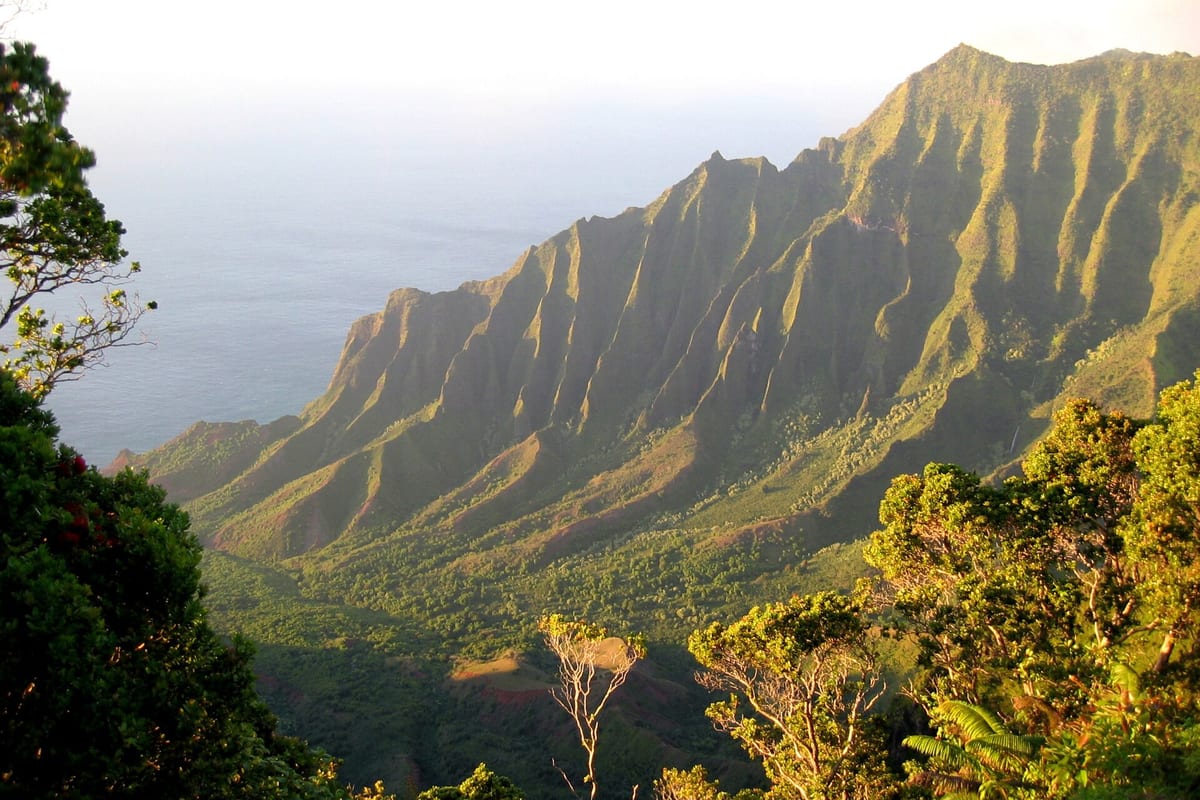
April is one of the best overall months for Hawaii. Rainy season ending, trade winds steady, water warming, and prices drop significantly after Easter. The whale season ends in early April. Everything on the islands is at its lushest — the Napali Coast on Kauai is at its most dramatic, waterfalls still running strong on the windward sides.
May in Hawaii
Average temperature: 22-28°C. Rain: Low. Verdict: Best overall month — great weather, low prices, low crowds.
May is arguably the single best month to visit Hawaii. Dry season beginning, water temperature rising to 25°C, trade winds reliable, and prices among the lowest of the year (apart from mid-September). Lei Day (1 May) is a state holiday with cultural events across all islands. Lanai’s cat sanctuary and Molokai’s remote scenery are at their most comfortable.
June in Hawaii
Average temperature: 23-29°C. Rain: Dry. Verdict: Great weather, prices start climbing late month for school holidays.
June brings reliable dry weather and warm water (26°C). First half of June is still shoulder season — prices stay reasonable. Second half of June ramps up as US school holidays start. The King Kamehameha Day holiday (11 June, with parades on the preceding Saturday) is a cultural highlight. Vog (volcanic smog) is at its most noticeable on the Big Island.
July in Hawaii
Average temperature: 24-30°C. Rain: Dry. Verdict: Peak summer prices, calm south-shore surf, hurricane season starts.
July is high season — hotel rates climb 40-60% above shoulder months, and major hotels sell out around the Independence Day holiday weekend. Weather is reliably warm and dry. South-shore surf peaks (Waikiki, Lahaina side of Maui) — this is the summer surf season. Hurricane season officially begins 1 June but strikes typically occur August-October.
August in Hawaii
Average temperature: 25-30°C. Rain: Dry. Verdict: Hot and expensive, hurricane watch; good for south-shore surf.
August continues peak summer prices. Water temperature peaks at 27-28°C. The windward (east) sides stay drier than they will again until next summer. Hurricane watch is active — one or two tropical systems typically affect Hawaii per season. Admission Day (3rd Friday of August) is a quieter state holiday. The Aloha Festivals start in late August and run through September.
September in Hawaii
Average temperature: 24-30°C. Rain: Dry. Verdict: Best price-to-weather ratio of the year.
September is one of the two best months for Hawaii (the other being May). Summer crowds leave right after Labor Day, prices drop sharply, weather stays warm and dry. Hurricane risk is highest in September — monitor forecasts if traveling in the second half of the month. The Aloha Festivals cultural season is in full swing on Oahu. Second-half September is the single cheapest week of the year on average.
October in Hawaii
Average temperature: 23-29°C. Rain: Shoulder. Verdict: Still great value, hurricane season winding down.
October extends the shoulder-season sweet spot. Weather is still reliably warm (23-29°C) with slightly more rain than August-September. Prices are among the lowest of the year. Hurricane season officially runs through November but October storms are much less frequent than August-September. Halloween in Lahaina (31 October) is a major street event when Maui hotels are typically full.
November in Hawaii
Average temperature: 22-28°C. Rain: Shoulder. Verdict: Great weather first half, Thanksgiving surge end of month.
First three weeks of November continue the shoulder-season value. North shore winter surf starts arriving mid-November — the Vans Triple Crown of Surfing kicks off (dates vary year-to-year based on conditions). Thanksgiving week (last week of November) sees a major domestic travel surge; expect prices 50-100% above the preceding weeks and shorter restaurant availability.
December in Hawaii
Average temperature: 21-27°C. Rain: Wet season starts. Verdict: Pre-15 Dec quiet, post-15 Dec peak Christmas crowds.
Early December (through about 15 December) is one of the quietest and best-value windows of the year. From 15 December through the first week of January, Hawaii hits peak prices and crowds — major hotels sell out, resort fees double, and restaurants need reservations. Humpback whales return to Maui waters starting mid-December. North shore surf is peaking.
Best time to visit each Hawaiian island
Oahu
Highlights: Honolulu metro, Waikiki, North Shore
Best time: April-May and September-November
Worst time: Mid-December through 15 January
Oahu has the widest range of microclimates in Hawaii. Waikiki (south-leeward) is sunny year-round. The windward (east) side gets double the rain. North Shore in winter is for watching the biggest waves on Earth, not swimming.
Maui
Highlights: Lahaina (recovering from 2023 fires), Wailea, Hana
Best time: April-May and September-November
Worst time: July-August (crowds), Dec 15-Jan 1 (peak holiday)
Maui is the top whale-watching island (Au’au Channel, December-April). Haleakala summit sunrise is best November-April when the air is clearest. The Road to Hana is driveable year-round but rains lushest in winter.
Big Island (Hawai’i)
Highlights: Kona (west), Hilo (east), Volcanoes National Park
Best time: April-October (both coasts drier), November-May for west coast
Worst time: Hilo-side December-March (wettest part of Hawaii)
The Big Island has the most extreme east-west climate variation — Hilo is one of the wettest cities in the US, Kona is semi-arid. Mauna Kea stargazing is best December-April (coolest clearest nights).
Kauai
Highlights: Napali Coast, Waimea Canyon, Hanalei
Best time: April-October (drier)
Worst time: November-March on the north shore (very wet)
Kauai is the wettest major island — Mount Waialeale is one of the rainiest places on Earth. Napali Coast kayaking is only safe May-September (big winter surf makes it dangerous). The south shore (Poipu) stays sunny year-round.
Lanai
Highlights: Hulopoe Beach, Munro Trail
Best time: April-October
Worst time: December-March (ferry can be rough)
Smallest major Hawaiian island with daily tourism. Resort-focused (Four Seasons). Ferry from Maui is twice daily — rough in winter trade winds.
Molokai
Highlights: Halawa Valley, Kalaupapa
Best time: May-October (dry side)
Worst time: November-April (wet, cooler, rougher channel)
The least touristy major Hawaiian island. Not for first-time Hawaii visitors — few hotels, limited restaurants, isolated. Rewarding for return visitors seeking traditional Hawaiian culture.
Best time by activity
| Activity | Best time | Notes |
|---|---|---|
| Humpback whale watching | January to March (peak); mid-December to early April (season) | Best off Maui’s Au’au Channel. Up to 10,000 humpbacks migrate from Alaska each winter. |
| North shore big-wave surfing | November to February | Spectator sport unless you’re a professional. Vans Triple Crown runs when conditions permit (Nov-Dec). |
| South shore surfing | May to September | Learn-to-surf window at Waikiki and south Maui. Smaller, friendlier swells. |
| Snorkeling and diving | April to October (calmer water, better visibility) | Molokini Crater (Maui), Shark’s Cove (Oahu) and Captain Cook Monument (Big Island) all peak May-September. |
| Napali Coast kayaking (Kauai) | May to September only | Winter surf makes the 17-mile route dangerous. Boat tours run year-round but have rougher winter trips. |
| Hiking Haleakala and Volcanoes | April-November (drier trails) | Both parks are open year-round but trail conditions degrade in winter rains. Clear-sky days are more common April-October. |
| Stargazing on Mauna Kea | December to April (coolest, driest, clearest) | Visitor Information Station at 2,800 m. Summit access limited for altitude safety. |
| Luaus (cultural festivals) | Year-round, but April-October are driest for outdoor luaus | Old Lahaina Luau (Maui) was the standard before the 2023 fire; many Oahu luau continue year-round. |
Dates to avoid in Hawaii
| Dates | Why |
|---|---|
| 15 December – 5 January (peak holiday) | Hotels sell out at peak rates, resort fees surge, restaurants need reservations weeks ahead. Prices 50-100% above shoulder seasons. |
| Fourth of July weekend | Major domestic travel surge. Honolulu airport and major hotels fully booked. Fireworks are limited by fire safety restrictions, so the holiday draw is weaker than mainland US. |
| Thanksgiving week (last week of November) | The last big surge of the fall season — prices climb back to summer peak levels for 7-10 days. |
| Easter / Spring Break (varies, mid-March) | School-break surge brings families and significant price premium at the family-oriented resorts. |
| Peak hurricane watch (August-September) | Not strictly “avoid” — but if you book, consider travel insurance that covers weather-related trip changes. One or two tropical systems typically affect Hawaii per year. |
When Hawaii is cheapest
Hawaii hotel pricing follows the US domestic travel calendar closely. The cheapest windows are:
- Second half of September — single cheapest week of the year on average. Hotel rates in Waikiki and Wailea run 40-55% below Christmas-week rates.
- First two weeks of December (before 15 Dec) — same price point as September, with slightly better weather.
- All of May — dry weather, warm water, and summer-peak prices have not kicked in yet.
Expect prices to spike for Christmas-New Year (15 Dec-5 Jan), Spring Break (varies, mid-March), July 4 weekend, and Thanksgiving week.
Related Hawaii and travel guides
- Full United States travel guide
- The 25 cheapest countries to visit in 2026
- Polynesian migrations and Pacific exploration
Frequently asked questions
What is the overall best time to visit Hawaii?
The best overall times to visit Hawaii are late April through May, and September through early December. These shoulder seasons combine warm weather (22-28°C), low rainfall, calm water, and prices 30-50% below the December-January and July-August peaks. Early September has the best price-to-weather ratio of the year.
When is the cheapest time to visit Hawaii?
The cheapest weeks to visit Hawaii are the second half of September, the first two weeks of December, and most of May. Hotel rates in these windows run 30-50% below the Christmas, Spring Break and summer peaks. Flights are also notably cheaper — late September round-trip from the US mainland can be half the Christmas-week fare.
When is whale season in Hawaii?
Humpback whales migrate from Alaska to Hawaiian waters from mid-December through early April. The peak viewing season is January and February, when population density off Maui’s Au’au Channel is highest. Up to 10,000 humpbacks visit Hawaii each winter — the Au’au between Maui, Lanai and Molokai is the single best viewing spot in the Pacific.
Is it a bad time to visit Hawaii during hurricane season?
Hurricane season runs 1 June to 30 November, with peak activity August-October. Hawaii is hit by direct hurricanes much less often than the Caribbean — about one named storm per year affects the islands, and most pass offshore. Travel in these months is fine with travel insurance that covers weather-related changes. September has the highest risk; early November is safe.
What is the best time to visit each Hawaiian island?
Oahu is best April-May and September-November. Maui is best in the same windows plus December-March for whale watching. The Big Island west side (Kona) is good year-round; the east side (Hilo) is wettest December-March. Kauai is driest April-October — Napali Coast kayaking is only safe May-September. Molokai and Lanai are best May-October when the inter-island ferry rides are calmer.
When is the rainy season in Hawaii?
Hawaii’s rainy season runs from November through March, with peak rainfall usually in January-February. Windward (east) sides of each island see 3-5× more rain than leeward (west) sides. Waikiki, Lahaina, Kona and Poipu stay dry year-round. The rainy season is why the islands are so green — most rain falls at night or in short morning showers.
When is the best time to see Hawaii waterfalls?
Hawaii waterfalls are at their most dramatic from January through April, after the wet season has refilled all the catchment basins. Road to Hana (Maui), Akaka Falls (Big Island east side) and Wailua Falls (Kauai) all peak in this window. May and June also give strong flow with better weather for driving the routes.
When is the best time to surf in Hawaii?
For big-wave spectating on the North Shore (Waimea, Pipeline, Sunset), November through February. For learning to surf and smaller recreational waves, April-October — south shore spots at Waikiki and Lahaina side of Maui have mellow swells and warm water. The Vans Triple Crown of Surfing runs on the North Shore late November to late December when conditions align.
Does Hawaii have a bad season to visit?
No single period is “bad” — Hawaii is a year-round destination. The weakest combinations are: the second half of February on windward sides (coolest water, wettest trails) and the Christmas-New Year holiday window (highest prices and fully-booked top restaurants). Even in these periods, leeward resorts stay sunny and warm.
What should I pack for a Hawaii trip in each season?
Summer (May-October): swimwear, light cotton, sun hat, reef-safe sunscreen (required by state law), light rain jacket. Winter (November-April): all of the above plus a warmer layer for Haleakala or Mauna Kea summit if planning, water shoes for wet rocks, strong reef-safe sunscreen (the sun stays strong year-round at 20° latitude).