Before Alexander the Great, before Rome, before anything most Westerners think of as antiquity, there was Persia — the Achaemenid Empire, the biggest state the world had ever seen. At its peak around 500 BC, it stretched from the Aegean Sea to the Indus River, from Egypt to Central Asia. About 44% of the world’s population lived under a single administration for the first time in history.
Here is the full story of the empire that built Persepolis, invented the pony express, wrote the world’s first bill of rights, and eventually lost to a 25-year-old Macedonian. For visitor logistics see our Iran travel guide.
How Persia rose
Before Cyrus, Persia was a small kingdom in the mountains of what is now south-western Iran, sitting under the shadow of the Medes to the north. In 559 BC, a young prince named Cyrus inherited the throne of Anshan (near modern Shiraz) at about 20 years old.
Over the next 30 years he ran one of the most improbable rises in ancient history. First he defeated his Median overlords in 550 BC and merged the two kingdoms. Then he pushed west across Anatolia and defeated Croesus of Lydia (famous for gold — Herodotus tells the story that Croesus asked the Delphic oracle whether he should attack Persia; the oracle said “a great empire will fall”, and he assumed it would be Cyrus’s). Finally, in 539 BC, he took Babylon without a battle — the Babylonians opened the gates.
By the time Cyrus died in 530 BC, fighting nomads on the empire’s northeastern frontier, he ruled the largest single state that had ever existed.
The Cyrus Cylinder: the first bill of rights?
The document that made Cyrus’ reputation was the Cyrus Cylinder — a small clay cylinder inscribed in cuneiform, buried in the walls of Babylon after his conquest of the city. It records his official statement of policy: he would return exiled peoples to their homelands, restore their gods to their temples, and rule with tolerance rather than terror.
The Persian policy was strikingly different from the Assyrians they replaced. Where Assyria had ruled through deportation and fear, Cyrus explicitly returned deported peoples — including the Jewish exiles who had been in Babylon for 50 years since Nebuchadnezzar took Jerusalem. The Book of Ezra credits Cyrus with authorising the return to Jerusalem and the rebuilding of the Temple. The Bible calls him “the anointed” (mashiach) — the only non-Jew to be called this.
The Cyrus Cylinder is often described as “the world’s first bill of rights”. This is a stretch — the document is a royal proclamation, not a legal document — but it is a genuine early statement of religious tolerance and repatriation, and its principles were praised by U Thant, secretary-general of the UN, in 1971. The original cylinder is in the British Museum; the UN keeps a replica.
Darius the Great: the administrator
Cyrus’ son Cambyses conquered Egypt in 525 BC, then died in 522 BC after an eight-year reign. A succession crisis followed — sorted out by Darius I, a distant cousin of the royal family who seized the throne and spent his 36-year reign (522-486 BC) organising Cyrus’ conquests into a working state.
Darius’ innovations:
- Provinces (satrapies) — the empire was divided into around 20 satrapies, each with a satrap (governor), a military commander and a scribe reporting separately to the king to prevent corruption
- Coinage — the golden daric became the standard imperial currency, one of the world’s first widely accepted coinages
- Standardised weights and measures across the whole empire
- The Royal Road — 2,700 km of paved highway from Susa to Sardis (western Turkey), with 111 relay stations for the imperial postal system (see our Royal Road post)
- Construction of Persepolis as ceremonial capital (see our Persepolis post)
Darius also extended the empire east into the Indus valley and north into European Scythia (across the Danube), and finally west into Europe, where his invasion of Greece ran into trouble.
The Greek problem
Persia and Greece are the two civilisations you cannot separate from each other’s stories. Persia tried three times to bring Greece under its rule. Darius sent a punitive expedition in 490 BC that was defeated at Marathon by the Athenians. His son Xerxes personally led a massive invasion in 480 BC — the Battle of Thermopylae (Leonidas and the 300 Spartans), the naval battle of Salamis (Xerxes lost), the land battle of Plataea (Xerxes lost again).
Herodotus, our main source for these wars, was a Greek writing 40 years later. He treats Persians as competent, well-organised and often admirable — but ultimately doomed to lose to Greek freedom. This has coloured Western perception of Persia for 2,500 years. Persian sources tell different stories that mostly don’t survive.
Persia never conquered Greece, but it stayed the dominant Mediterranean power for another 150 years. Its wealth reshaped Greek politics — most of the 4th-century BC wars between Greek city-states were subsidised by Persian gold.
The fall
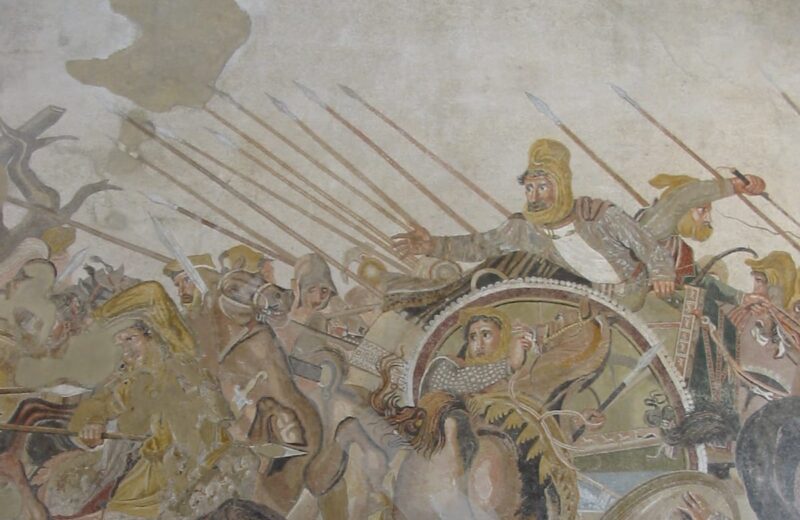
Alexander the Great invaded the Persian Empire in 334 BC, aged 22. He defeated three successive Persian armies (the Granicus, Issus, Gaugamela), destroyed the ceremonial capital at Persepolis in 330 BC — probably deliberately, in revenge for Xerxes’ burning of Athens 150 years earlier — and finished off the last Achaemenid king, Darius III, later that year. The Achaemenid Empire, 220 years old, was gone.
Alexander tried to run the empire as a Perso-Macedonian fusion state: he married Persian noblewomen, adopted Persian court dress, and kept much of the satrapy system. His generals hated it. When he died in 323 BC, the empire fragmented — the eastern part went to his general Seleucus, forming the Seleucid Empire, which itself gradually collapsed to Parthian and then Sasanian Persia. Persia would not be independent again as a great power until the 3rd century AD, and would remain a Middle Eastern superpower for centuries after that.
Where to see Persia today
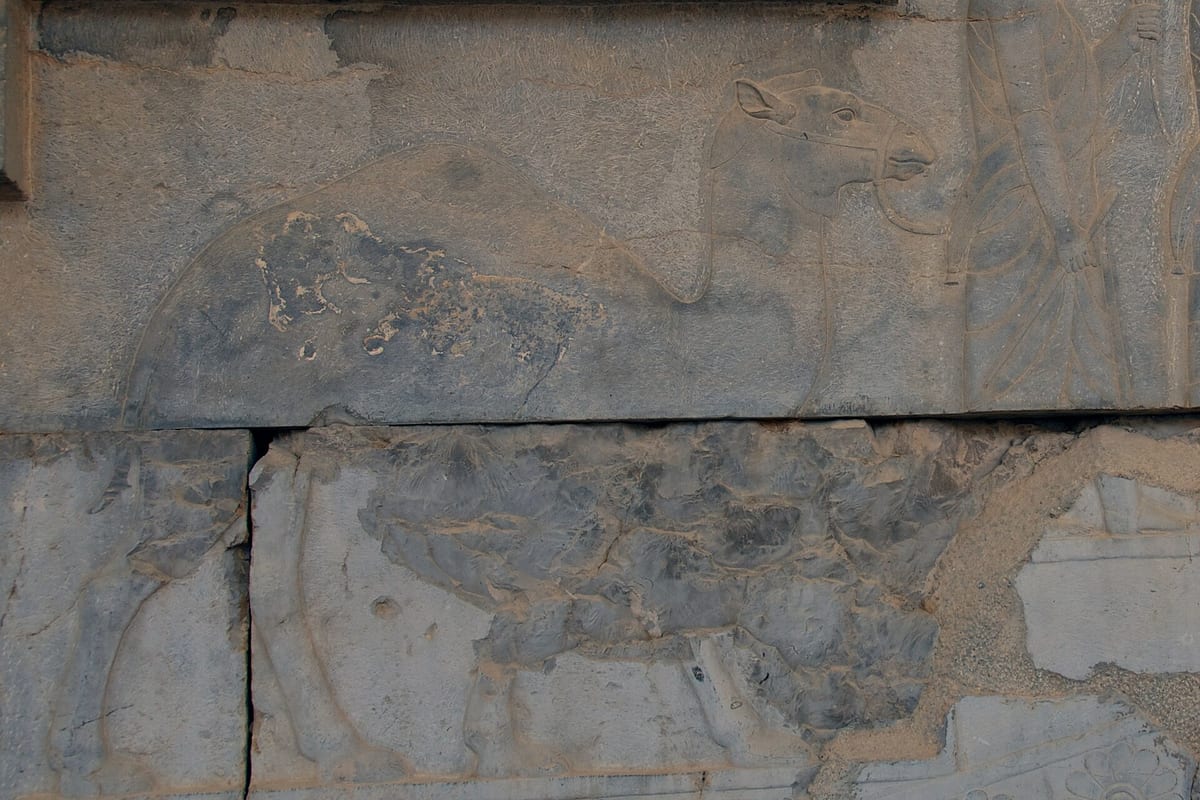
- Persepolis — the ceremonial capital, near modern Shiraz. The Apadana staircase reliefs are the empire’s single greatest surviving image
- Pasargadae — Cyrus the Great’s original capital, with his tomb still standing
- Naqsh-e Rustam — rock-cut royal tombs including those of Darius I and Xerxes, near Persepolis
- Susa (Shush) — the empire’s administrative capital in what is now Khuzestan
- National Museum of Iran, Tehran — the finest Persian collection in the world
- British Museum, London — the Cyrus Cylinder plus extensive Achaemenid material
- Louvre, Paris — Susa reliefs and tilework
Iran is a warm, safe and hospitable country for most travellers. See our Iran travel guide and best time to travel for planning.
Frequently asked questions
How big was the Persian Empire?
Who was Cyrus the Great?
What is the Cyrus Cylinder?
What did Darius the Great do?
How did the Persian Empire fall?
Can you visit ancient Persian sites today?