For about 30 years in the middle of the 5th century BC, Athens was the most productive city in world history. Democracy was tested at scale for the first time. Drama was invented. Historical writing was invented. Philosophy took the shape it still has 2,400 years later. The Parthenon was designed and built. All of this happened in a city of maybe 60,000 adult male citizens plus their families, roughly the size of a modern American college town.
The politician who presided over most of it was Pericles. Here is what he did, what he did not do, and what you can still see. See our history of ancient Greece for context.
Pericles the man
Pericles was born around 495 BC into one of Athens’s most aristocratic families. His father Xanthippus commanded the Athenian navy at the Battle of Mycale in 479 BC, the final defeat of Persia. His mother Agariste was a niece of the great political reformer Cleisthenes.
Pericles grew up in the immediate afterglow of Athens’s survival of the Persian invasions. He entered politics in his early twenties and by 461 BC was the effective leader of Athens’s democratic party. He held the elected office of strategos (general) 15 years running, which by convention gave him the political leadership of the city.
Ancient sources are almost unanimous that he was an unusually controlled personality — he rarely appeared in public, spoke sparingly, kept his private life quiet, and (unusually for Athenian politicians) refused all bribes and dinner invitations.
Democracy at work
Athenian democracy was radically different from modern representative democracy. About 30,000-50,000 adult male citizens (excluding women, slaves and resident foreigners, who made up the majority of the actual population) had the vote. They exercised it directly, in an Assembly that met on the Pnyx hill 40 times a year.
The Assembly was open to any citizen, made policy by simple majority vote, and could pass legislation on the same day it was proposed. The executive was a Council of 500, selected by lot annually. Most government offices were also allocated by lot rather than election — the assumption being that all citizens were equally capable of running the state. Only military positions (like Pericles’s strategos) required specialist skill and were elected.
Ordinary citizens served as jurors on huge juries (200-500 people, no judges), heard court cases, and were paid a small daily allowance so that even the poor could afford to participate. Aristotle later called this “the sovereignty of the poor” — and he did not mean it as a compliment.
The Parthenon project
In 447 BC, Pericles proposed to spend the reserves of the Delian League (Athens’s military alliance against Persia) on rebuilding the Acropolis, which had been destroyed by the Persians in 480 BC. The proposal was controversial — the money technically belonged to the alliance, not to Athens — but the Assembly approved it.
Over the next 30 years Athens built:
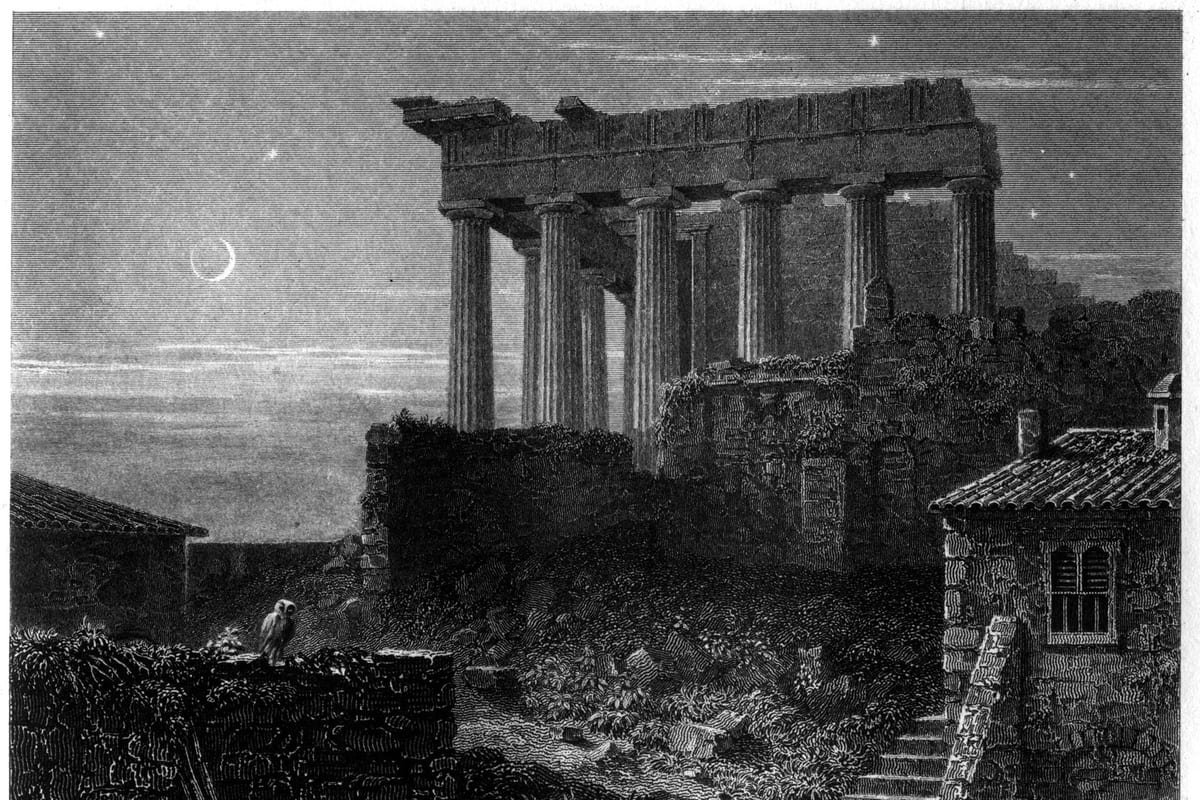
- The Parthenon (447-438 BC) — the temple of Athena Parthenos, designed by Ictinus and Callicrates, with sculpture supervised by Phidias. Every curve on it is subtly non-parallel — the columns lean inward, the base is curved to counter optical illusions
- The Propylaea (437-432 BC) — the monumental gateway to the Acropolis
- The Erechtheion (421-406 BC) — the temple to Athena and Poseidon with the famous Caryatid porch (six draped female figures serving as columns)
- The Temple of Athena Nike (427-424 BC) — a small elegant Ionic temple on the Acropolis’s southwest corner
The total spent was around 5,000 talents — enough to fund the city’s navy for about a decade. This was, in modern terms, roughly like the US Apollo program relative to GDP. It employed thousands of stonemasons, sculptors and labourers for a generation.
The cultural explosion
Pericles’s Athens was where classical Greek culture came together. The three great tragedians (Aeschylus, Sophocles, Euripides) all lived and worked in Athens during his time; their plays were performed at the Theatre of Dionysus on the south slope of the Acropolis. Aristophanes was inventing comedy at the same theatre.
Herodotus lived in Athens for a period and read parts of his Histories aloud in public. Thucydides was a young man there and would later write the definitive history of the Peloponnesian War. Socrates was in his prime, walking the agora and asking uncomfortable questions.
The philosopher Anaxagoras — who taught Pericles — was one of the first people to argue that the sun was not a god but a hot rock. He was prosecuted for impiety and had to flee Athens.
The Peloponnesian War
Pericles’s Athens was also on collision course with Sparta. Athens ran the maritime Delian League; Sparta ran the land-based Peloponnesian League. Their rivalry finally exploded in 431 BC into the Peloponnesian War, a 27-year civil war that would eventually break Athenian power.
Pericles’s strategy was defensive: withdraw the entire Athenian population inside the city’s Long Walls (which linked Athens to the port of Piraeus), rely on the navy to keep supplies coming, and let Sparta wear itself out. It was the right strategy, but overcrowding the city led to disaster.
In 430 BC, a devastating plague hit Athens — probably typhus or an early strain of Ebola-like haemorrhagic fever, still debated. Thucydides survived it and left a chillingly detailed description. It killed perhaps a third of the city, including Pericles himself, in 429 BC.
Without Pericles the Athenian assembly made a series of catastrophic decisions — the disastrous Sicilian Expedition of 415-413 BC lost 40,000 men and 200 ships. Athens hung on for another decade but eventually surrendered to Sparta in 404 BC.
What survives today
- The Acropolis — Parthenon, Propylaea, Erechtheion, Nike temple all still standing, though the Parthenon lost its roof in 1687 when a Venetian shell hit a Turkish gunpowder store inside it
- Acropolis Museum — houses the surviving sculpture, including the Caryatids replaced with copies on the Erechtheion
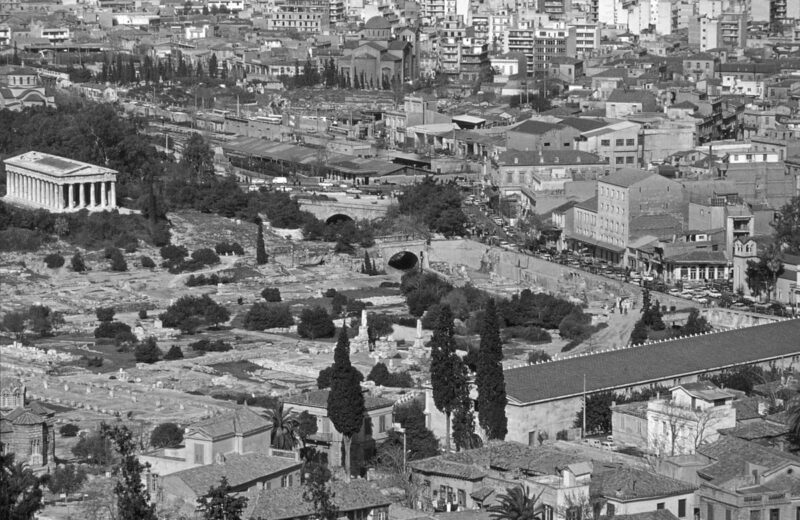
- Ancient Agora — Pericles’s meeting place, with the Temple of Hephaestus (best-preserved Greek temple anywhere) still standing
- Pnyx hill — the meeting place of the Assembly, where Pericles gave his speeches. The rostrum from which he spoke is still visible
- Theatre of Dionysus — south slope of the Acropolis, where the great tragedies premiered
- National Archaeological Museum, Athens — the finest collection of Classical Greek sculpture
- British Museum, London — the “Elgin Marbles”, about half the Parthenon sculpture, controversially removed by Lord Elgin between 1801 and 1812
See our Greece travel guide, best time to visit Greece and 7-day Greek itinerary options.
Frequently asked questions
Who was Pericles?
What was Athenian democracy?
Who built the Parthenon?
What was the plague of Athens?
What did ancient Athens contribute to Western culture?
Can you visit Pericles’s Athens today?