Ancient Greece is often taught as if it began in Athens in the 5th century BC. That is like teaching American history as if it started in the 1960s. The Greek world had been building its culture for 2,000 years before Pericles was born, and it kept going for 700 years after Alexander died. Here is the full arc — Minoan Crete to the Roman conquest — with what you can still visit at each stage.
For visitor logistics see our Greece travel guide and the best time to visit Greece.
Minoans and Mycenaeans (2000-1100 BC): the Bronze Age foundation
Greek civilisation started on Crete, not the mainland. The Minoans — named after the mythical King Minos — built Europe’s first great civilisation between about 2700 and 1450 BC. They ran a maritime trade network across the eastern Mediterranean, built enormous unfortified palaces (Knossos was so complex that Greek myth remembered it as the Labyrinth), and wrote in a still-undeciphered script called Linear A. They were essentially the Bronze Age Netherlands: rich merchants who did not need city walls because they controlled the sea.
Around 1450 BC, Minoan civilisation collapsed — possibly triggered by the eruption of the Thera volcano (see our Minoan Crete post). Mycenaean Greeks from the mainland moved in and took over.
The Mycenaeans (c. 1600-1100 BC) were the world of Homer’s Iliad. Warrior kings in massive fortified citadels — Mycenae, Tiryns, Pylos, Argos. They wrote in Linear B, an early form of Greek that Michael Ventris decoded in 1952. Their society collapsed around 1177 BC in a general Bronze Age catastrophe that also destroyed the Hittite Empire and left Egypt reeling. Greece went dark for about 300 years.
Dark Age and Archaic period (1100-500 BC): rebuilding
The Greek Dark Age (roughly 1100-800 BC) saw literacy disappear, populations crash, and cities shrink to villages. When Greek life recovered around 800 BC, it emerged with a new script (adapted from Phoenician — the alphabet you’re reading now), a new political shape (the polis or city-state), and a shared cultural identity built around Homer’s epics and the Olympic games (traditional founding date 776 BC).
The Archaic period (800-500 BC) sees Greeks fanning out across the Mediterranean. Colonies were founded from Marseille in France to Naples in Italy to Cyrene in Libya to Byzantium (later Constantinople). By 500 BC, more Greeks may have lived outside mainland Greece than inside it.
Classical Greece (500-323 BC): the Golden Age
The Persian Wars (490 and 480-479 BC) are the hinge. When a Greek coalition led by Athens and Sparta defeated two Persian invasions against enormous odds, the resulting confidence produced the Golden Age.
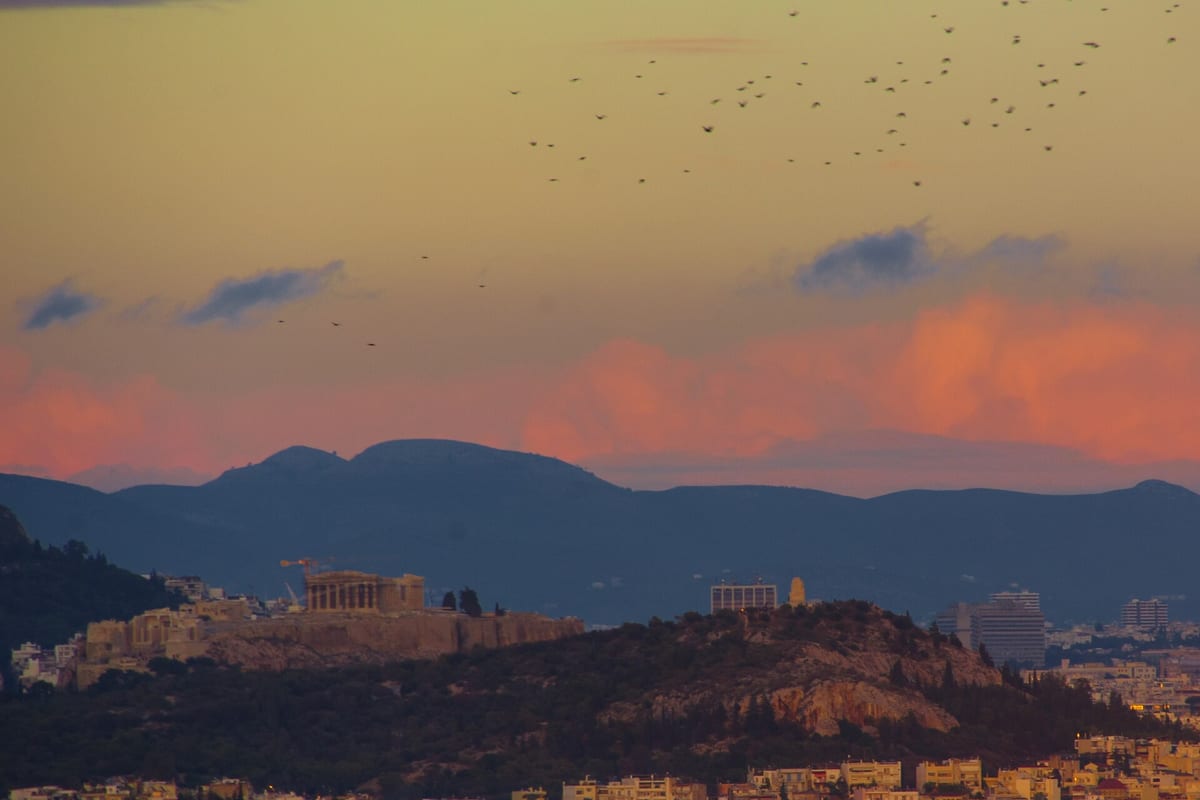
Most of what people know as “ancient Greek culture” was compressed into about a century in one city, Athens (see our Athens under Pericles post). Aeschylus, Sophocles, Euripides invented drama. Herodotus and Thucydides invented history. Socrates and Plato invented Western philosophy. The Parthenon was built. Democracy — real, direct, participatory democracy — was practiced by about 30,000 male citizens.
It all crashed in the Peloponnesian War (431-404 BC), a 27-year civil war between Athens and Sparta that broke Athenian power and left Greece exhausted. The 4th century BC saw shorter wars, shifting alliances, and philosophers (Plato, Aristotle) writing about how everything had gone wrong.
Alexander and the Hellenistic world (336-30 BC)
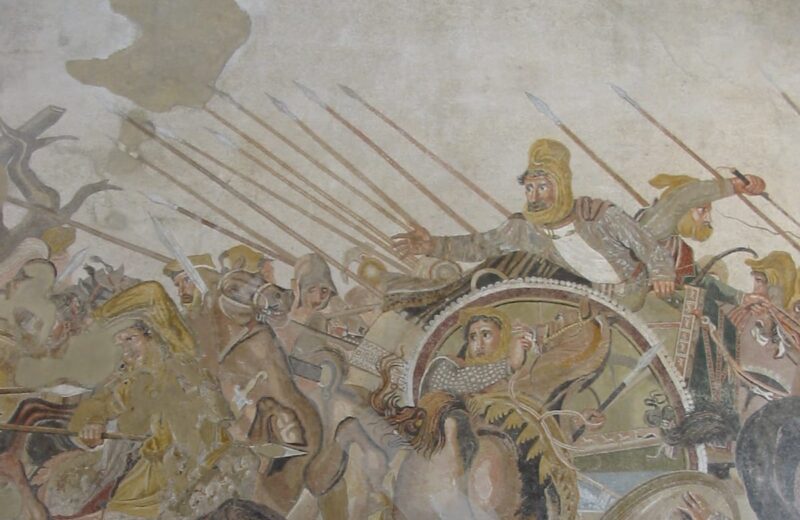
The Macedonian conquest of Greece under Philip II (359-336 BC), followed by his son Alexander’s 11-year conquest of the Persian Empire, transformed Greek culture into a Mediterranean-wide phenomenon (see our Alexander post).
After Alexander died in 323 BC, his empire split into successor kingdoms — Ptolemaic Egypt, Seleucid Syria/Iran, Antigonid Macedon, Pergamon in Anatolia. All of them ruled locally through Greek-speaking elites and built cities on Greek models. Greek became the common language from Marseille to Kabul. The Hellenistic era is when Alexandria’s library was built, when Euclid wrote his geometry, when Archimedes calculated pi, when the earliest cities were laid out on rectangular grids.
Rome finished off the Hellenistic kingdoms one by one over the 2nd and 1st centuries BC. Greece itself became a Roman province in 146 BC, though the culture survived — even Latin-speaking Romans considered Greek the language of educated conversation.
Roman Greece and Byzantium (146 BC-1453 AD)
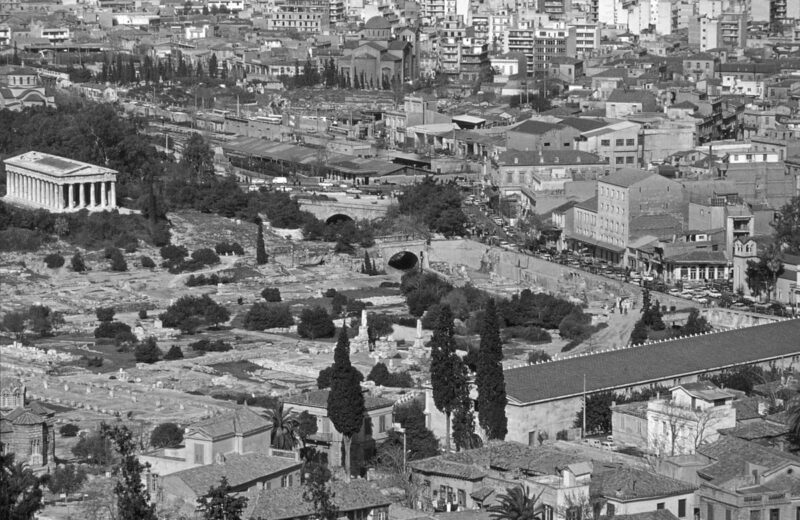
Under Rome, Greece was a slightly shabby cultural theme park. Its temples still worked, its philosophy schools still ran, but political power lay elsewhere. Roman emperors (Hadrian especially) sponsored major building programs at Athens, Delphi and Olympia. Christianity arrived early — Paul preached in Corinth and Athens — and by 400 AD had displaced traditional religion.
When the Roman Empire split in the 4th century, the eastern half — governed from Constantinople, Greek-speaking, Christian — is what we now call the Byzantine Empire. It survived until 1453 AD, when the Ottomans took Constantinople. In a real sense, “ancient Greece” lasted 3,500 years, from Minoan Crete to the fall of Byzantium.
Where to see each period today
- Minoan: Knossos, Phaistos, Malia, Akrotiri (Santorini)
- Mycenaean: Mycenae, Tiryns, Nestor’s Palace at Pylos
- Archaic: ancient Corinth, Aegina temple of Aphaia, Delphi
- Classical: the Athenian Acropolis, Delphi, Epidaurus, Olympia
- Hellenistic: Pergamon (Turkey), Ephesus (Turkey), Priene (Turkey)
- Roman-Greek: Hadrian’s Library and Roman Agora in Athens, Nikopolis
- Byzantine: Meteora monasteries, Mystras, Hosios Loukas
See the individual country guides and best time to visit for planning.
Frequently asked questions
When did ancient Greece begin and end?
What was the Golden Age of Greece?
Who were the Minoans?
How did ancient Greece end?
Where can I see ancient Greece today?
What language did ancient Greeks speak?