Ancient Rome around 100 AD held roughly a million people — larger than any Western city would be again until London in the 1800s. Most of them lived in cramped tenement apartments, ate street food, spent afternoons at public baths, and packed into the Circus Maximus in numbers a modern stadium cannot match. Here is what a normal day actually looked like for a typical Roman.
See our Italy travel guide and Pompeii post for where to see it preserved.
Where Romans lived
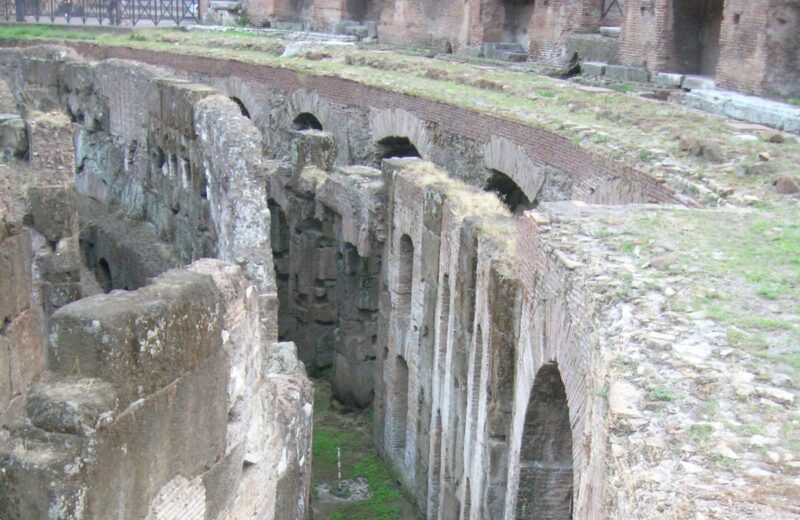
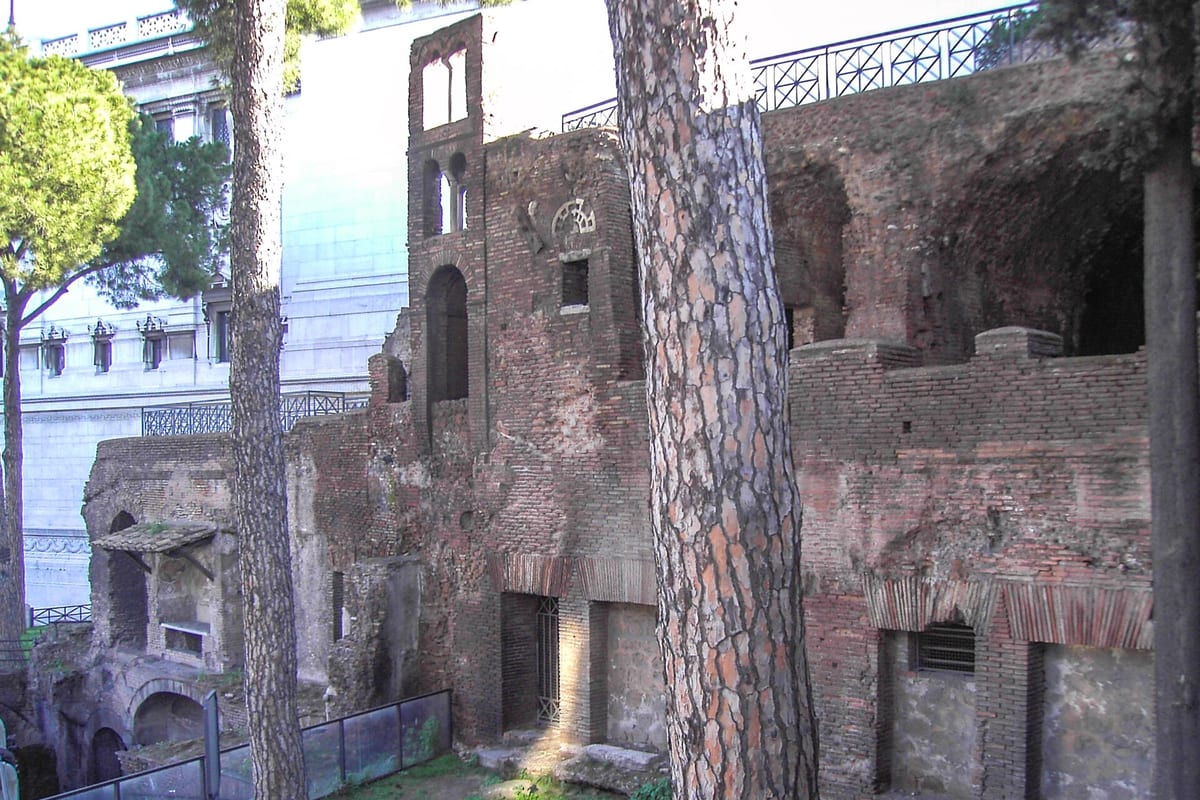
Only about 5% of Rome’s population lived in the private houses (domus) preserved at Pompeii — those were for the rich. The other 95% lived in insulae: large tenement apartment blocks, four to seven storeys tall, built around interior courtyards, packed into narrow streets. Rome had about 46,000 insulae according to the 4th-century Regionary Catalogues, versus 1,800 domus.
Insulae were death traps. Built cheaply in wood-frame construction over ground-floor shops, they collapsed regularly. Fire was constant — one imperial-era fire brigade served the whole city. Water was carried up by hand from ground-floor cisterns; sewage was dumped in the street or into chamber pots, then thrown out of upper windows (a real risk to pedestrians).
Rents were high. Cicero writes in one letter that his tenement blocks are so poorly built even the mice have moved out. Juvenal’s third satire is one long complaint about tenement life — the noise, the smell, the fire risk, the criminal neighbours. The wealthy fled to suburban villas outside the walls; the poor stayed in the insulae.
What Romans ate
Diet varied hugely by class. The rich ate elaborate banquets Petronius satirised in his Trimalchio scene — reclining on couches around three-sided tables (triclinia), served by slaves, courses of exotic meats and imported delicacies (parrot tongues, imported garum fish sauce, snails fattened on milk).
Ordinary Romans ate mostly grain-based food, cooked at communal thermopolia (fast-food counters) because most tenement apartments had no kitchens or fireplaces. Pompeii has dozens of thermopolia preserved with their food-warming counters and painted advertisements. Menu options at a typical thermopolium:
- Bread — the staple. Wheat bread for the middle class, coarser barley or millet for the poor
- Puls — a wheat porridge, the ancient Roman staple that persisted for centuries
- Stews of chickpeas, lentils or vegetables
- Cured meats — sausages, hams (Rome was a major meat market)
- Cheese
- Olives and olive oil
- Cheap wine mixed with water — usually 2-parts-water-to-1-part-wine, sometimes flavoured with honey (mulsum) or spices
Everyday meals were small. The main meal (cena) was in the late afternoon, after the baths. Meat was expensive except for pork; beef was uncommon. Sea fish was luxurious; freshwater fish and shellfish were more common. Sugar did not exist — sweeteners were honey and boiled-down grape must.
The wine industry was enormous. Vesuvius alone produced 25 million litres a year. Roman wine was thick, sweet and heavy, meant to be diluted. Drinking undiluted wine was considered barbarian behaviour.
The bath culture
The Roman bath complex was a genuine social institution. Almost every Roman went to the baths (thermae) in the mid-afternoon, from senators to slaves. Rome had over 900 bath complexes at various sizes, some free (imperial gifts to the people), most charging a small entry fee (a quadrans, a quarter of a penny).
A typical bath visit followed a standard sequence:
- Apodyterium — changing room. Deposit your clothes with an attendant (theft was constant; wealthy Romans brought slaves specifically to guard clothes)
- Palaestra — an open-air exercise yard, for ball games, wrestling, weight training
- Tepidarium — warm room for gentle sweating
- Caldarium — hot room with a hot plunge pool. Some baths added a laconicum, a sauna-like intense sweat room
- Frigidarium — cold plunge pool to close the pores
- Massage — oil applied by attendants, then scraped off with a strigil (a curved metal tool). Roman bath oil was not soap; it removed dirt through the scraping
Bath complexes had libraries, gardens, snack bars, poetry readings, gambling rooms, brothels attached. They were the Roman equivalent of a modern gym-spa-café-community centre combined. Some (the Baths of Caracalla, Baths of Diocletian) held tens of thousands at once.
Men and women bathed at different times of day, or occasionally in separate wings — depending on the emperor and social norms of the moment. Baths shifted between mixed and separate schedules multiple times over the imperial period.
What Romans did for entertainment
Rome had two main mass entertainments: chariot racing at the Circus Maximus and gladiatorial games at the Colosseum (see our Colosseum post). Chariot racing was actually the bigger of the two — the Circus Maximus held 150,000-250,000 people (estimates vary), while the Colosseum held only about 50,000.
Chariot races were run between four teams (Blues, Greens, Reds, Whites) whose supporters were like modern football fan groups — organised, tribally loyal, occasionally violent. Star drivers were the wealthiest sports celebrities in Roman history. The driver Gaius Appuleius Diocles retired around 150 AD with career winnings of 35 million sesterces — enough to feed the entire city of Rome for a year, or equivalent to about $15 billion in modern terms. He is probably the highest-paid athlete in human history in real terms.
Theatres were common too. Rome had three permanent theatres (Marcellus, Pompey, Balbus) plus temporary wooden theatres for special festivals. The comedies of Plautus and Terence and the tragedies of Seneca were performed, though pantomime and mime were more popular by the imperial period.
Working hours and holidays
Romans worked half-days. Most trades opened at dawn, closed at midday, reopened for a couple of hours in the late afternoon. Between midday and about 3pm was the meridiatio — nap time in the summer heat. Shops closed, most people went home, and only slaves worked through.
Public holidays were extensive. The republican calendar had about 45 public festival days per year; by the imperial period this had risen to about 200 days on which no legal or commercial business could be done. Combined with the meridiatio, ordinary Romans probably had more leisure time than most workers in the industrial 19th century.
Slaves
Roughly a third of the population of imperial Rome was enslaved. Slaves did most manual work — construction, agriculture, mining, domestic service — but also filled skilled roles as teachers, doctors, secretaries and accountants. Manumission (formal freeing) was frequent, and freed slaves became Roman citizens (their children fully so). Roman society was more socially mobile than many later slave societies for this reason.
Slave rebellions did happen. The most famous, led by the Thracian gladiator Spartacus in 73-71 BC, mobilised about 100,000 escaped slaves before being suppressed by the Roman general Crassus, who crucified 6,000 survivors along the Appian Way. Later slave revolts were rare and small.
Sanitation and mortality
Rome had the most developed sanitation infrastructure of any pre-modern city. Ten aqueducts brought over a million cubic metres of fresh water into the city each day, feeding hundreds of public fountains and dozens of public latrines. Sewers (the Cloaca Maxima, still functional today, was over 500 years old by imperial times) carried away waste to the Tiber.
Despite this, Roman life expectancy was probably around 25-30 years at birth (heavy infant mortality skewing the average). Anyone surviving to adulthood could expect to reach 50-60. The city was epidemically vulnerable — the Antonine Plague of 165-180 AD (probably smallpox) killed perhaps a quarter of the empire’s population.
Where to see it preserved
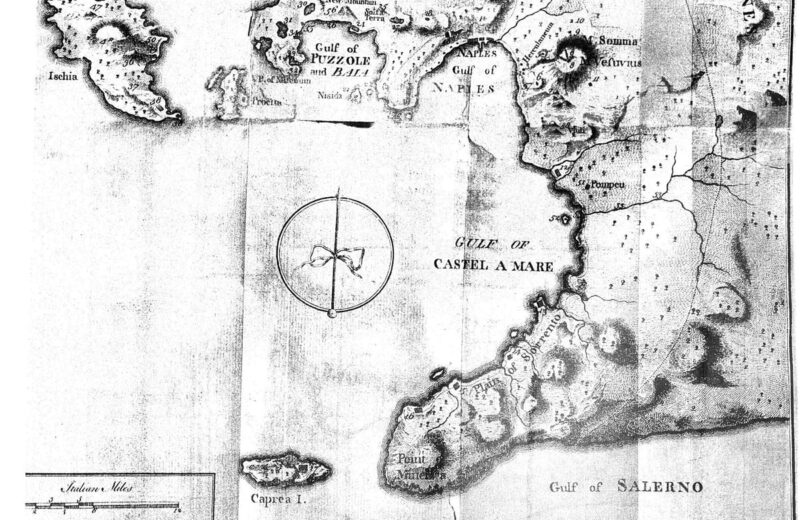
- Pompeii and Herculaneum — the entire physical fabric of Roman daily life, preserved in ash (see our Pompeii post)
- Ostia Antica — Rome’s port city, full of preserved insulae, thermopolia, warehouses, and mosaics. Less crowded than Pompeii and closer to Rome
- Baths of Caracalla, Rome — the second-largest bath complex Rome ever built, still standing at massive scale. Free-standing walls up to 30m tall
- Baths of Diocletian, Rome — even larger. The central hall was converted by Michelangelo into the church of Santa Maria degli Angeli, which still stands
- Circus Maximus, Rome — outline still visible as a park in central Rome, near the Palatine hill
- Colosseum, Rome — see our Colosseum post
See our Italy travel guide and best time to visit Italy.
Frequently asked questions
How big was ancient Rome?
Where did ordinary Romans live?
What did Romans eat?
What was Roman bath culture like?
What did Romans do for fun?
What was Roman work life like?